

Leadership for a Sustainable Planet: Interview with Terri Morrisey

GoGreen Next has a unique place in the Irish context and our project has benefitted from leaders in sustainability, well-being and mental health. Terri Morrisey, is no stranger to the GoGreen projects and was Co Chair of the Advisory board of Go Green Routes, Innovation Manager and subsequently, a member of the GoGreen Next Advisory board. Now she has a new role as the newly appointed Chairperson of An Taisce-The National Trust for Ireland, the oldest environmental charity in Ireland. She co-founded ‘This Is’, an organisational, culture change and leadership development consultancy, with Richard Plenty more than two decades ago. She took time out from her consultancy to take on the role of CEO of the Psychological Society of Ireland from 2015-2019 where she initiated a major organisation change programme. She co-facilitated The First International Summit on Psychology and Global Health: A Leader in Climate Change in Lisbon (November 2019). This seminal event brought together over 45 Psychological Associations to produce a proclamation of climate change with a series of planned actions. Terri co-facilitated the second summit in Bogota, Columbia, in 2022 as well as the third summit in Kingston, Jamaica in 2025.
In mid-December, I had the opportunity to interview Terri which proved to be both a compelling conversation and an insightful experience. I noted her presence and authority on topics as wide ranging as the state of psychology in Ireland today to exploring the influence of conspiracy theories. During our conversation, Terri reflected on her career in psychology, her new leadership role with An Taisce, and the vast challenges facing climate action, real-world research and communication today.
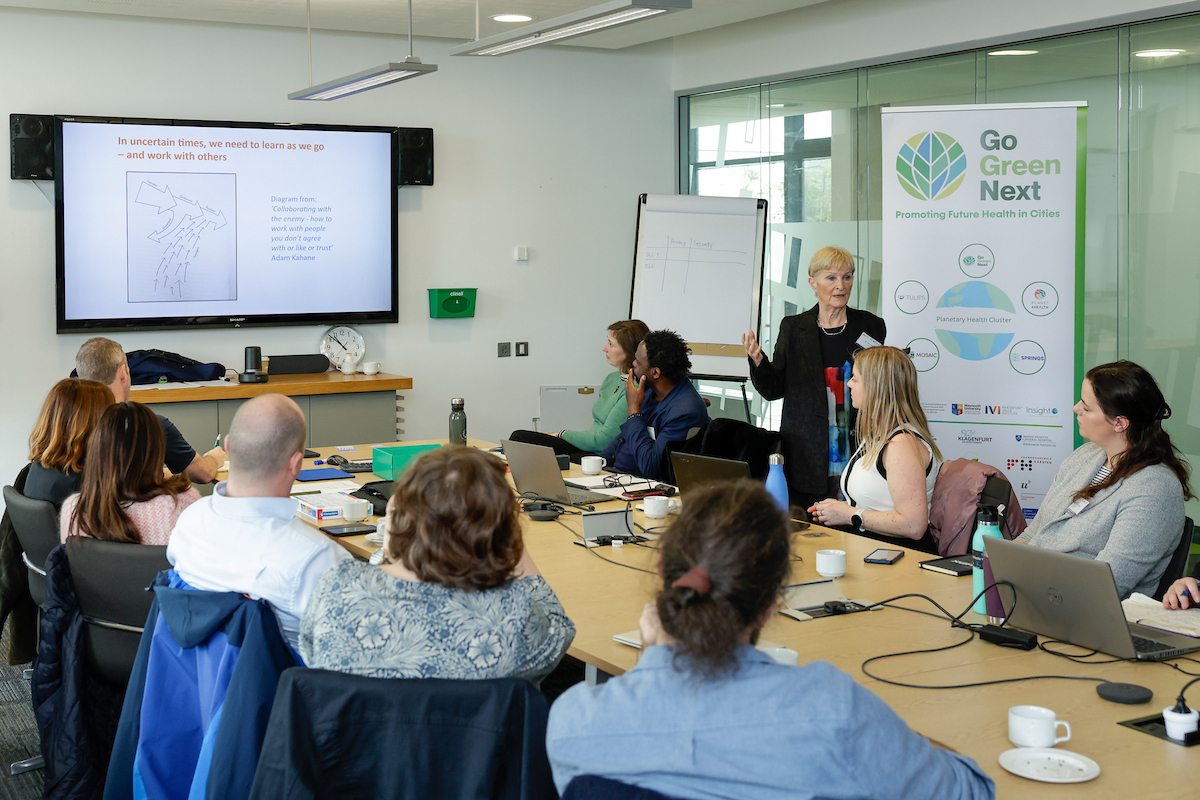
When asked about how her previous experiences prepared her for the position of Chairperson, Terri explained that the journey began not with a bid for leadership but through a commitment to climate action. Motivated by her background in psychology and a desire to contribute to environmental issues in Ireland directly, Terri applied to chair An Taisce’s Climate Committee. Subsequently, there she became a trustee and board member, and in September was elected Chair of the organisation.
Reflecting on the state of Psychology in Ireland, Terri described it as a broad and diverse field, encompassing everything from clinical, business, environmental to forensic psychology. As an organisational psychologist, she sees this area as particularly active, with many professionals working in applied settings to support organisations and leadership. Terri noted how psychology can often be dominated by a clinical focus, leaving other equally important areas under-recognised.
We spoke about the role of individuals in creating change in an uncertain world. Terri’s stance on this was clear; this responsibility should lie with organisations and systems, rather than individuals. While individuals can of course contribute, complex problems need “a coalition of like minded organisations and people to address them”. In her view, making progress in terms of the big challenges facing society – climate change, political polarisation, conflict and future pandemics – depends on shared responsibility, multiple perspectives and long term co-operation.
Climate change, she acknowledged, is one of the most urgent threats facing humanity, but not the only one. As the interviewer it was notable that Terri didn’t use the terms ‘climate chaos’ or ‘climate catastrophe.’ For Terri, language is key and if we use loaded terms the impact could be negative leading to emotional overload. She also alluded to increasing political polarisation, the ongoing risk of war, and the likelihood of future pandemics as equally serious concerns. Without the ability to communicate, listen, and work across differences, she warned, societies risk becoming further divided at a time when unity is most needed.
Looking back on her work with the Horizon 2020 project GoGreen Routes (2020-2024), Terri highlighted several innovations that stood out, particularly the development of an online resilience training tool and the development and application of mobile apps to assess the footprint in cities. She also praised the creativity emerging from specific pilot interventions, noting that while more innovations were always possible, many initiatives demonstrated strong potential for impact with citizens. “We need to make citizen impact, that’s why the project was funded, so that should always be the first part of any conversation about the GoGreen projects.” This was a recurring theme throughout the interview. Too often, she suggested, there is insufficient follow up to assess whether the initiatives have made lasting difference to communities, policy, or the environment. In her view, instead of assessing projects solely during the funding period, greater emphasis must be placed on measuring outcomes, sustainability and real world change.
As a mentor to many early stage researchers in the project including Cassie Murphy and David Buckley, Terri spoke honestly about the pressures facing early career researchers, in particular PhD candidates involved in large multi-annual projects. Terri went on to explain how conflicting demands from project partners and academic supervisors can leave students in a difficult position. Her advice centres around “stickability” and how completing one’s research must remain pragmatic, even while contributing meaningfully to project work. In her opinion, effective mentoring requires empathy for these tensions and an understanding of the practical issues faced by emerging researchers.
Terri’s position on travel and sustainability are clear. Deeply committed to climate responsibility, she avoids air-travel where possible and advocates for a more mindful approach to conferences and events. She explained her dislike for hybrid meetings, which can often weaken both in-person interaction and online participation. Terri favours a more balanced model: reserving in-person meetings for when they are necessary and opting for the use of online formats wherever possible in order to reduce environmental impact.
Our conversation also touched on misinformation and conspiracy theories, an issue Terri deems as increasingly dangerous. She emphasised the need for scientific research to be accessible to the public and communicated in such a way that is digestible to all. In her view, the true measure of good science communication is whether complex ideas can be explained clearly to non-experts, especially policymakers and communities. For Terri, dissemination of evidence based research is crucial in creating real change and helping those without a scientific background understand the data.
The commitment to clarity and widespread engagement underpins Terri’s vision for An Taisce. As Chair, Terri aims to strengthen the organisation’s role as a trusted, independent voice on environmental protection and heritage in Ireland. Through education programmes, volunteer networks, and community initiatives, she believes that meaningful environmental action must be rooted in both sound science and public understanding.
Essentially, the interview revealed a leader who is driven not by personal ambition, but by a belief in collaborative action, evidence based decision making and long term responsibility. As Terri concluded, if climate action, research and innovation are to succeed, they must not solely generate knowledge, but ensure that it is disseminated, understood and translated into lasting change. Both GoGreen Projects have clearly benefitted from Terri’s leadership and mentoring, with many graduates having achieved significant milestones thanks to her generous collaborative spirit. Above all Terri reminds us all, and often, that unless we are working for citizens and communities, we are not achieving our research and innovation ambitions.
We would like to thank GoGreen Next Intern Erin Ruddy for writing this story!
Subscribe for updates
Sign up to our newsletter and receive updates on the project progress